


Boletines-Artículos
Free translation
By VELIA GOVAERE - Professor UNED
The fascinating wizard of the French used up his stardust. He did so at the worst time, when his enchantment was most pressing for him, for Europe and for the world. There was, no doubt, quite a waste in one whose abundance of talent came, perhaps, short of emotional intelligence.
Macron is the great star of French politics in a time depleted of European leadership. Hélas, shooting star.
He emerged, as a deus ex machina, practically out of nowhere, in the 2017 presidential elections. Young 39 years old, with little political experience, his charisma made the difference. He transformed his presence into an electoral movement and, after his triumph at the polls, he achieved the unthinkable and unknown feat of forming a party from scratch and, with it, securing an absolute majority in the National Assembly.
Like a tsunami, it swept the French political arena and set its standard as the last bastion against the right-wing and xenophobic populism of Marine Le Pen.
In times of structural change, the word reform was not enough for him. Instead, the leitmotiv for him was "transformation", and he intended to lead it both in France and in the European Union. This bold and unusual narrative turned into hope.
The name of his party, La République en Marche, said a lot and said nothing. It was one of active neutrality, above the tide of old lefts and rights, which Macron took on as irrelevant relics of the past. France gave him a blank check.
Hearts conquered
The first surprise of his first meeting with voters, in that spring of 2017, was the conquest of the hearts of a quarter of the voters who put him in the lead in the first electoral round.
That was his electoral base truly his own. Then, he won the election with 21 million votes, 66% of the electorate. In part, there was magic in that victory. But, above all, it was a defensive movement of the healthiest of French culture that put him in the Elysée, in repudiation of the advance of xenophobia. Those votes were not, strictly speaking, all of his own.
Without a consolidated party and facing the legislative elections that in France take place after the presidential elections, Macron pulled his magic wand out of his sleeve: from nothing, he created a party. It was open to all, without distinction. Anyone could run for deputy, anyone could vote in the primaries, it was enough to register and present credentials, not necessarily political.
The Internet was there to replace public squares, and the web served as a fertile furrow. This brilliant movement appealed to a new way of doing politics and responded to a desire to renew the legislative ranks. It was no longer necessary to go through the caudine gallows of partisan filters. The party became a true mediation between citizens and politics.
The result was a list of candidates of La République en Marche, a true reflection of French society and culture. In just seven weeks since the founding of his party, Macron achieved the largest absolute parliamentary majority in half a century.
Between his party and his allies, he had the backing of more than 60% of the National Assembly. There were scientists, doctors, engineers, philosophers, students, but also industrialists, farmers, rural teachers, in short, every Tom, Dick and Harry, and the largest historical number of female deputies. The traditional social democracy was crushed and the usual right wing was reduced to its lowest representation since De Gaulle.
Social indifference
After such magical brilliance, it remained to be seen whether the political initiatives corresponded to the hopes pinned on him. With the youthful figure of the Little Prince, he assumed in power the forms of Louis XIV and the pretensions of Napoleon. Macron was neither of the left nor of the right. He was and is simply a... banker.
From his first months, he showed his indifference to social demands. The first thing he did was to make employment more precarious, facilitating dismissal by crushingly lowering employers' burdens. On the other side of the business trenches, he reduced the wealth tax and lowered taxes on companies, capital gains and profits. He wanted to turn France into an investment paradise, but, apart from historic profits for companies, investments barely increased by a modest 2%.
That was not popular. But with his parliamentary majority, he could have afforded a thorough discussion of these measures. But why worry about such democratic minutiae? The measures were passed by decree, using Article 49.3 of the Constitution, aware that there would be no vote of no confidence that would make him back down.
Then came a rise in fuels, equally untimely and, with it, a mass movement totally new on the French scene: the rural mobilization, with the novel symbol of yellow vests.
But it still had magic. The big protest said "Macron ignores us", and, then, he personally took on the biggest national conversation since the French Revolution. It was "le grand débat national," Macronized version of "les cahiers de doléances" of 1789.
No change
Macron toured the country and listened to accusations, answered questions, took off his coat, rolled up his sleeves. For hours and weeks. It was a whole staging to calm the waters. And he did calm the waters. But there was no change.
During the pandemic, he rested his impetus for unpopular reforms. At the top of the list was postponing the retirement age. France rested and Macron managed to get re-elected. But this time, with less magic, he lost the legislative majority. There, what he could not do when he was strong, he tried to approve when he was weak.
And if he did not open debate with the majority, less did he do it in the minority: he passed the pension law by decree. It was the debacle. And here we are, with a weakened Macron and four years ahead of him already out of breath.
Light of the street, darkness of the house, his European policy is brilliant. All the more so that he occupies the vacant place of Angela Merkel. But he will not be able to be strong in Europe with feet of clay in France. A banner of the French demonstrations warned him: "Here we beheaded Louis XVI". He knows this being born in the cradle of the French Revolution, but he does not take it as a forewarning.
In the eye of the hurricane, Macron visited Xi Jinping. There, he proclaimed that Europe needs to endow itself with strategic autonomy and must not be a vassal of the United States nor conform to its pace of confrontation with China. I agree. But that voice is a prisoner of the initial stumble of a second mandate.
A student of Verlaine, Macron will remember Les sanglots longs des violons de l'automne (The long sobs of violins in autumn). With only 20% approval, Le Monde (18/4/2023) speaks of the heaviness of a second term without horizon. It looks like an epitaph. How much hope arrogantly wasted!
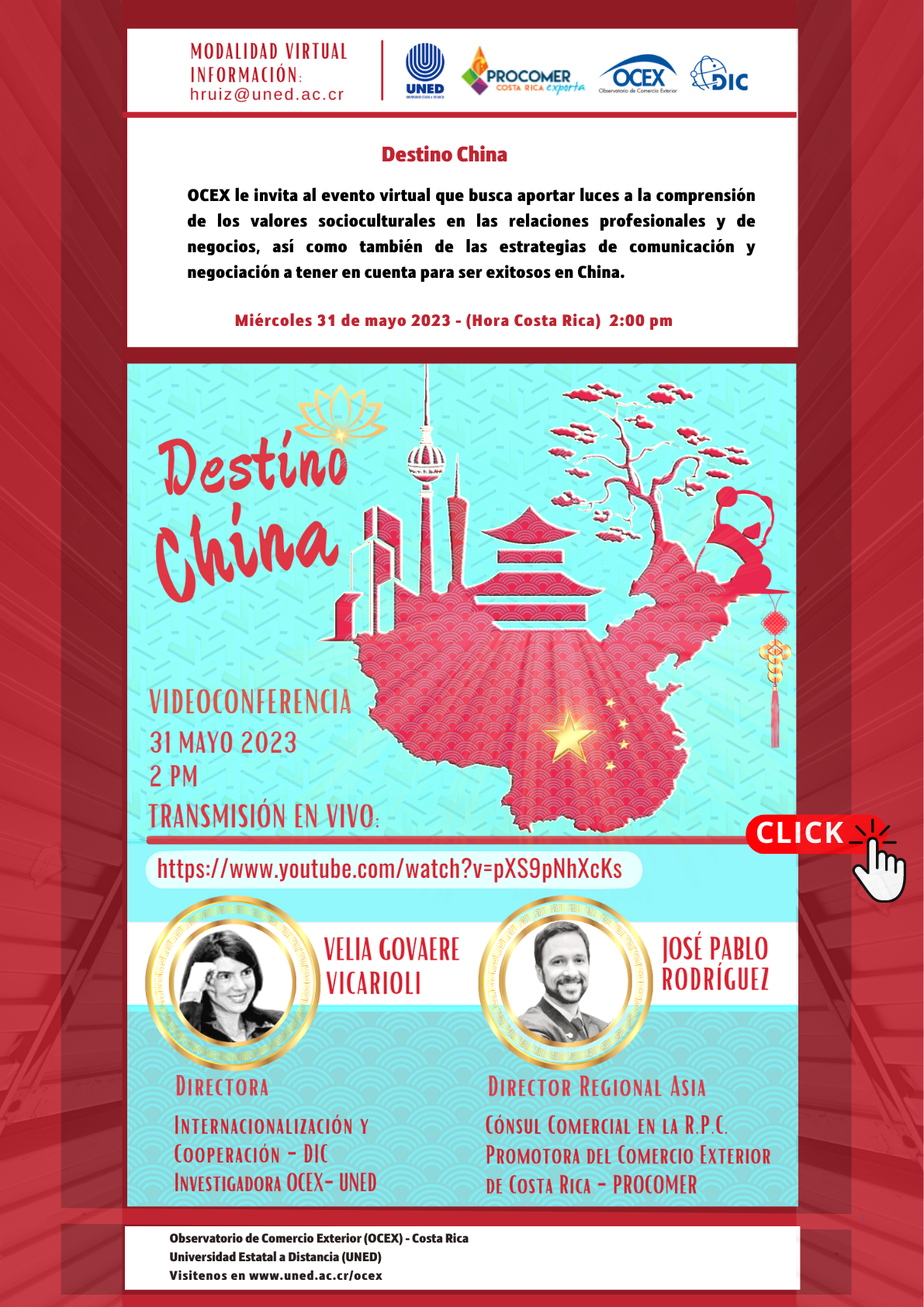
Ponemos a su disposición el link que será utilizado, el día del evento, para la transmisión en vivo:
https://youtube.com/live/pXS9pNhXcKs?feature=share
Versión en inglés
POR VELIA GOVAERE VICARIOLI
El fascinante mago de los franceses agotó su polvo de estrellas. Lo hizo en el peor momento, cuando su encantamiento era más apremiante para él, para Europa y para el mundo. Hubo, sin duda, bastante desperdicio en quien la abundancia de talento llegó, tal vez, manca de inteligencia emocional.
Macron es la gran estrella de la política francesa en un tiempo agotado de liderazgos europeos. Hélas, estrella fugaz.
Surgió, como deus ex machina, prácticamente de la nada, en las elecciones presidenciales del 2017. Joven de 39 años, de escasa experiencia política, su carisma hizo la diferencia. Transformó su presencia en movimiento electoral y, tras su triunfo en las urnas, logró la impensable y desconocida proeza de formar un partido desde cero y, con él, asegurarse la mayoría absoluta en la Asamblea Nacional.
Como un tsunami, arrasó la arena política francesa y puso su estandarte como último bastión frente al populismo derechista y xenófobo de Marine Le Pen.
Accese el artículo completo en: https://www.nacion.com/opinion/columnistas/macron-en-su-laberinto/3NNEFUBY2JAV3OVW3GKQPLO4YA/story/
Artículo publicado en Periódico La Nación, 30 de abril 2023.
La autora es coordinadora de OCEX y catedrática de la UNED
Free translation
By VELIA GOVAERE - Professor UNED
Let the cannons speak! No other voice should be heard. Anyone who cries for peace is suspect. The Pope is called "Putinian" for speaking of two empires. The Chinese peace plan is viewed with suspicion. It is alleged to respond to its own interests. What a crime, to benefit from peace! Meanwhile, the skies grow gloomier with each passing day.
Since Ukraine, darkness is spreading over all the panoramas and if the shadow is not yet upon us, if this senseless war continues, it will not be long before we realize how much it affects us. It is foolish to see it through the prism of Putin's punishment or Russia's defeat. It is naive to ignore that human destiny itself is at stake.
The historical account of the origins of the conflict is controversial. It is nonetheless fraught with unpredictable consequences. From contested versions between opposing sides, its roots go back to the fall of the Berlin Wall and the failed management of the prospects for lasting peace that opened up there. In the midst of the drunkenness, in the face of the dismembered rival, it was forgotten that there is no permanent humiliation without dangerous nationalist awakenings. The lessons of the First World War were ignored, and the fingers were stuck in the wound of a Russia that was powerless to prevent it. NATO expanded its enveloping tentacles as far as it could. And here we are, caught between equally dire choices.
Could it have been different? That no longer matters. Subjunctives do not exist in history. Of this tragedy, only what follows remains to be written. The libretto of this script would wish for a happy ending. That is no longer possible. What remains is the duration of a misfortune where we are all losers.
The United States will also discover that there are no roses without thorns. If these winds do not abate, they will reap storms. For the moment, that does not count, benefiting as they are, so far, from the revival of their war industry, from the overpriced sale of their liquid gas and from a European Union with no prospects of becoming another geopolitical rival.
In 2014, the countdown to catastrophe began, when Russia invaded Crimea. Or did the countdown begin, rather earlier, at the Maidan insurrection, encouraged by the United States to depose a pro-Russian president? It doesn't matter anymore. The reality is that Europe reacted in an exemplary manner. The Organization for Security and Co-operation in Europe encouraged a dialogue. A peaceful agreement was reached in Minsk and the clock could have stopped there. But it did not. Hostilities continued in the Dombas. Germany and France returned for peace and the Normandy Quartet was formed with Russia and Ukraine. There was a new Minsk protocol, in 2015. It was also not observed. When its points turn out not to differ from future peace agreements, we will be aware of hidden interests that derailed that understanding. We do not talk about that anymore. So let's not talk about it.
It does not matter the origin of the winds of war in Ukraine. The only agenda should be to stop the war. But to get there you have to overcome vested interests and simplistic, black-and-white narratives, without the necessary shades of gray that end up being the only realistic ones. Marco Travaglio describes the war in Ukraine as a Little Red Riding Hood story, but only with wolves. Pope Francis warns that in that Dantesque scenario, conflicting imperial interests cannot be ignored. It is business as usual. Thucydides warned that truth is the first casualty of war. Opinions are pigeonholed on one side or the other of the trenches.
In Ukraine everyone erred. Putin erred in invading it and his calculation of an easy victory failed. Western predictions of crushing Russia with sanctions also failed. Rather, Europe shot itself in the foot. The Russian invasion restored meaning to NATO, which Macron had ruled brain-dead. The threat of expansion, which Putin claimed to stop, was rather extended to the Nordic countries. The United States took advantage of it to focus it, from now on, against China. But Putin managed to turn the war into a matter of national interest and even his opponents understand that Russia cannot lose.
Alessandro Orsini recounted many instances in the first months of the war when Zelensky expressed willingness to negotiate. In March 2022, one month after the Russian invasion, there were agreements in Istanbul. Naftali Bennet, the Israeli prime minister, went to Moscow to mediate and won important concessions from both sides. But Bennet himself later said that the West had blocked his efforts by dissuading Zelensky from making concessions. He was promised the weapons needed for a victory. Ukraine would provide the dead. That's another blunder.
Gen. Mark Milley, the U.S. Chief of Staff, warned that such a victory is highly unlikely. So where is this war going? The most likely scenario is a protracted conflict that will inevitably end at the negotiating table. Why not get there at once? We are not fighting, then, for victory, but to improve positions in a future agreement. Such prolongation is senseless. It is also insensitive. It is measured in destruction, misery, death, hunger and migratory waves. 20% of the population is already in Europe, 12% displaced from their regions. One third of Ukrainians lost their anchor in life. And the count goes on.
With all and the dimension of that pain, the itinerary that this war risks is more atrocious. According to Hegel, history repeats itself. Nietzsche makes it return again and again to the same nonsense. This "eternal return" to political cowardice is exemplified by Philip Zelikow's historical narrative. He recounts that the powers entangled in World War I were ready to stop it soon after it began. But no one dared to take the first conciliatory step. The delay cost 2 million dead and from that prolongation the Czar fell and the Russian Revolution triumphed. The consequences have lasted until today. The delayed peace was so bad that it sowed the seeds of the next war disaster.
This is known and accepted. It is easy to interpret events looking backwards. Looking forward, one cannot trust those who have shown a lack of historical judgment and, sadly, there are today's Western leaders with their record of destabilizing the Middle East. I am shocked, on the other hand, by Kissinger who, visionary, warns that in order to avoid another world war, an early peace is necessary.
Defeating Russia is unlikely and dangerous. Putin taking over Ukraine is equally unlikely. The point is to stop the conflict before an accident leads to the abyss. Dragging it out is dangerous. Already a B-52 bomber flew almost over Kaliningrad, a US drone in the Black Sea is the subject of controversy, Poland and Slovakia are sending fighter planes. Every day there are more incidents with unknown consequences. We are counting down to peace or a return to the caves.
Versión en inglés
POR VELIA GOVAERE VICARIOLI
¡Qué hablen los cañones! Ninguna otra voz debe escucharse. Cualquiera que clame por la paz es sospechoso. Al Papa se le llama “putiniano” por hablar de dos imperios. El plan chino de paz se mira con suspicacia. Se alega responder a intereses propios. ¡Vaya delito, beneficiarse de la paz! En tanto, cada día que pasa ensombrece más los cielos.
Desde Ucrania, la oscuridad se extiende sobre todos los panoramas y si la sombra todavía no la tenemos encima, si esta insensata guerra sigue, no tardaremos en percatarnos de cuanto nos afecta. Es una insensatez verla bajo el prisma del castigo de Putin o la derrota de Rusia. Es ingenuo ignorar que el mismo destino humano está en la picota.
Es controvertido el relato histórico de los orígenes del conflicto. No por eso deja de estar cargado de consecuencias imprevisibles. Desde versiones impugnadas entre bandos enfrentados, sus raíces llegan hasta la caída del muro de Berlín y la gestión fallida de las perspectivas de paz duradera que ahí se abrieron. En medio de la borrachera, ante el rival desmembrado se olvidó que no hay humillación permanente sin peligrosos despertares nacionalistas. Se ignoraron las lecciones de la I Guerra Mundial y se hincaron los dedos en la herida de una Rusia impotente para impedirlo. La OTAN expandió sus tentáculos envolventes hasta donde pudo. Y aquí estamos, atrapados entre disyuntivas igualmente funestas.
Accese el artículo completo en: https://www.nacion.com/opinion/columnistas/la-cuenta-regresiva/4MD566YSQJE3LA57JD7GUFK554/story/
Artículo publicado en Periódico La Nación, 22 de marzo 2023.
La autora es coordinadora de OCEX y catedrática de la UNED
Más artículos…
Página 10 de 53