


Boletines-Artículos
Cuando pase el desconcierto
POR VELIA GOVAERE -
Mentes ilustres se afanan por descifrar los dignos de estos tiempos, pero la humanidad nunca ha podido entender su porpio presente.
¿De qué libro es capítulo lo que estamos viviendo? ¿Cómo discernir el significado de este acontecimiento único en la civilización humana?
Mentes ilustres se afanan por descifrar los signos de estos tiempos. Pero la humanidad nunca ha podido entender su propio presente (Friedell, 1927).
Al contemporáneo le caen encima los eventos como hechos aislados, desagregados de la totalidad histórica que les da sentido. Por eso Hegel decía que en la noche todos los gatos son pardos. Se refería a la imposibilidad de entender, en el instante, el trazo total de la pintura vivencial de la raza humana, que sólo la historia descifra. Es un rompecabezas cubista que solo se entiende con la última pieza. Ex ante reina la incertidumbre. Ex post todos somos sabios.
El impacto de la pandemia es tan formidable que es imposible que pase sin dejar marcas indelebles en la civilización. Las cifras de la hecatombe son escandalosas.
El comercio se reducirá hasta 32% (OMC). Ya están sin empleo 26 millones, sólo en Estados Unidos y esa economía retrocederá un 25%. Los grandes países quieren pagar, con astronómicas cifras, una salida indemne de la crisis. Misión imposible.
¿Nuevo Plan Marshall? A valor actual, esa fue una inversión de 130 mil millones de dólares. Alemania puso ya, a su propia disposición, 6 veces más. Estados Unidos, 8 veces más. El eurofondo que se mezquina en la UE es 15 veces mayor.
Son números insólitos y probarían, por sí solos, que la crisis del coronavirus tiene la fuerza de un punto de inflexión. Eso está claro.
También entendemos que la pandemia no escribe sobre tabula rasa. El mundo ya estaba enfermo y la conciencia social así lo comprendía.
La malaise dictaba una urgencia de cambios. Progreso y miseria han marcado grandes giros de la historia. Hasta ahí estamos claros. Lo que no sabemos es si ese mundo asimétrico y ecológicamente insostenible seguirá su curso impasible, después de esta breve pausa, o si, más bien, se precipitará el final de una era con un tsunami político disruptivo que todo lo arrastra y todo lo transforma.
Distintas percepciones del ayer. Urgidos, como estamos, de domesticar la incertidumbre, también es humano el sesgo cognoscitivo que nos induce a pensar con los deseos que reclaman un retorno a lo mismo. Sobre todo cuando lo conocido era fuente de estabilidad económica.
Ese afán de volver a una “agradable normalidad” se manifestará menos entre quienes vivían esa realidad como diario castigo de abandono, decretado por infortunio de nacimiento o por desigual acceso a oportunidades de superación.
Entre los más urgidos de lo mismo de antes están las bolsas de valores que siguen impertérritas el curso de la pandemia.
El capitalismo productivo, paralizado en las fábricas o retenido en los siete mares, en tanqueros cargados de petróleo, solo se sobrevive a sí mismo como un valor virtual en la bolsa.
El capital sigue ahí con vida propia, buscando revalorizarse y en peligro de precipitarse al vacío. Es un capitalismo de casino de apuestas, tan real como cualquier otro. Un día se apuesta al pánico; otro, a la necesidad apremiante de retorno a la normalidad.
Si creemos a los inversionistas, solo tenemos que apretar los dientes y esperar que pase la mala racha. Mientras tanto, la apuesta más fácil es a perder.
Los centros de análisis de riesgo no pueden evitar estrujarse el cerebro en búsqueda de patrones conocidos de referencia. Hacen curvas comparativas con catástrofes “similares”, como si esto tuviera parangón.
El covid-19 indujo una catástrofe financiera por razones extraeconómicas. Pero la dimensión de este suceso producirá transformaciones más allá de lo cuantificable.
Es lo más parecido al concepto de “cisne negro” de Nissan Taleb: un tremendo suceso inesperado de gran impacto con consecuencias históricas impredecibles
Sin embargo, y por definición, los cisnes negros se vuelven blancos, después de un tiempo, es decir, la rara avis se torna conocida y retrospectivamente incluso previsible. No estamos todavía ahí.
Sometidos a la irreverente dictadura de lo matemáticamente inverificable, la incertidumbre se resolverá en la política, en otras palabras, en la esfera de liderazgos existentes y posibles. Ahí la consigna “America First” todavía puede corromper el futuro.
El cada cual para sí mismo y cada país por su cuenta marcó el vacío total de liderazgo mundial. El multilateralismo fue la primera víctima de ese repliegue hacia fronteras nacionales.
Estrasburgo se pensó francesa antes que europea cuando, agotadas sus instalaciones, giró la vista hacia lejanos hospitales franceses, en vez de cruzar el río y buscar las desocupadas camas alemanas de Stuttgart, a la vuelta de la esquina. En su discurso al país, Merkel ni mencionó siquiera la palabra Europa.
Con medidas extremas tomadas en democracia, razón y ciencia están salvando a los pueblos de lo peor de la catástrofe, apoyados en una devuelta autoridad de los especialistas de la salud. La institucionalidad y la importancia de una buena gestión pública saldrán reforzadas. Eso es indiscutible.
Tópico aparte merece el populismo. La crisis probó el vacío intelectual de su demagogia y todo lo ineficaces que podían ser en el poder. Su diletantismo se pagó con vidas.
Ese populismo saldrá debilitado, es cierto, pero también es verdad que si regresamos a un diseño de mundo, ignorando las grietas del paradigma actual, estaremos, además, endeudados, desempleados y más desiguales después de la pandemia. Eso podría regenerar alas rotas al nacionalismo, a la irracionalidad y a la xenofobia.
¿Qué pasará? Eso es “lo que no conocemos y apenas sospechamos”. A diferencia de Darío, si no sabemos adónde vamos, sí sabemos de dónde venimos. Hasta ahí lo racional. Pero que esto sea un punto de inflexión no se nota en ninguna parte todavía.
No hay brújula en la tormenta. Faltan capitanes, mapas de ruta, propuestas de cambio. Si volvemos a lo mismo, no habremos aprendido nada. Pero eso solo se sabrá cuando pase el desconcierto.
La autora es coordinadora del OCEX y catedrática de la UNED.
Artículo publicado en Periódico La Nación, 8 de Mayo 2020.
Costa Rica: un proceso de apertura comercial inconcluso
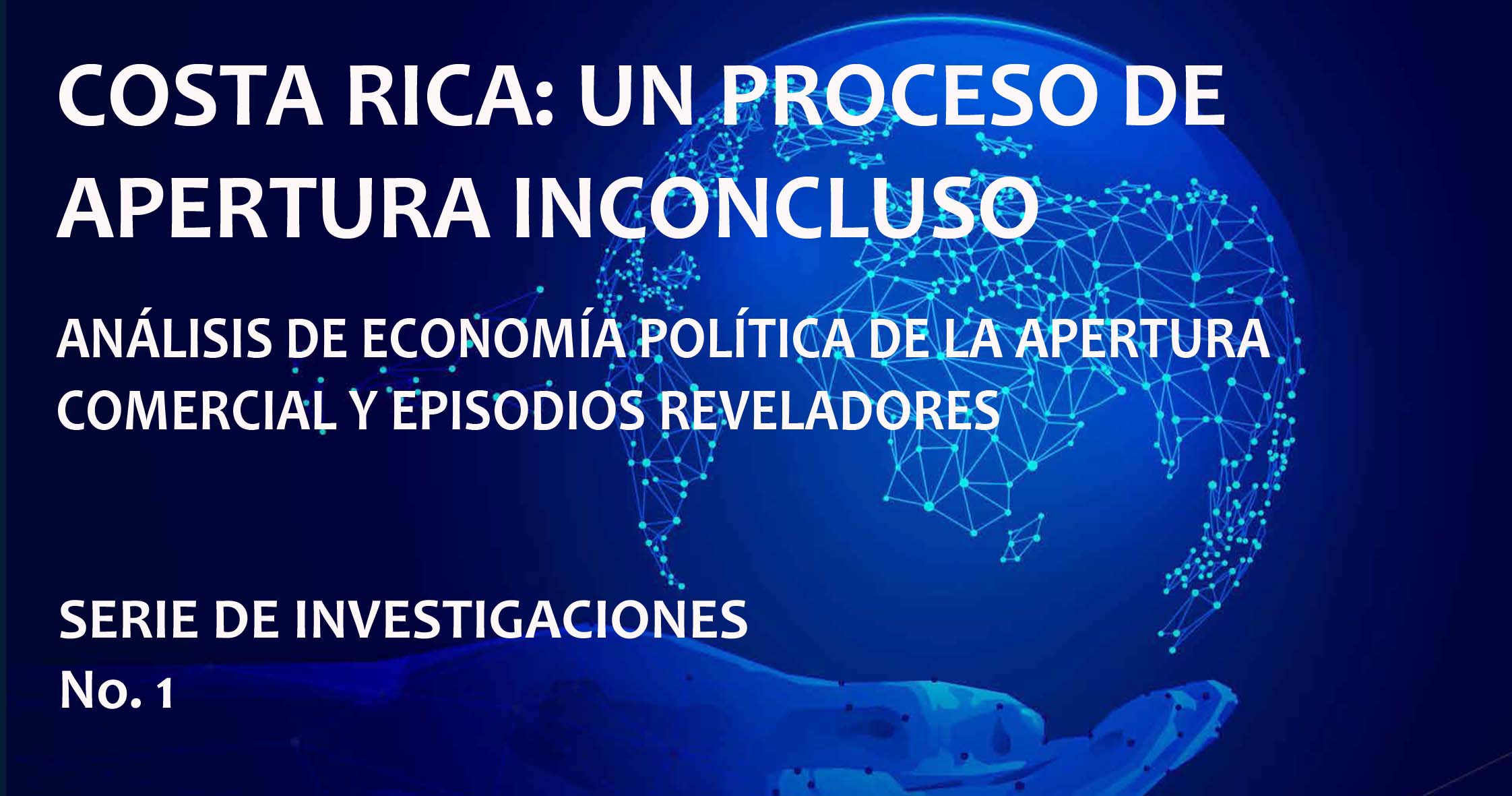 Los especialistas Ricardo Monge y Luis Rivera nos convidan a dar una mirada reflexiva del modelo de apertura costarricense, bajo el sugestivo título de “Costa Rica: un proceso de apertura inconcluso: análisis de economía política de la apertura comercial y episodios reveladores”.
Como socios estratégicos de OCEX, el Observatorio se complace en apoyar la difusión de este análisis cuyos “episodios reveladores” desnudan las contradicciones entre un modelo de apertura comercial y el proteccionismo ligado a sectores productivos agrícolas, que todavía se mantienen bajo esa lógica.
En este libro se estudia el desempeño del modelo de apertura comercial, las aristas de la economía política del referéndum del DR-CAFTA y un análisis detallado de la balanza de la política agrícola costarricense. Ponemos esta obra a disposición de nuestros lectores en el siguiente link. (Costa Rica: un proceso de apertura inconcluso).
Videoconferencia:Medidas no arancelarias
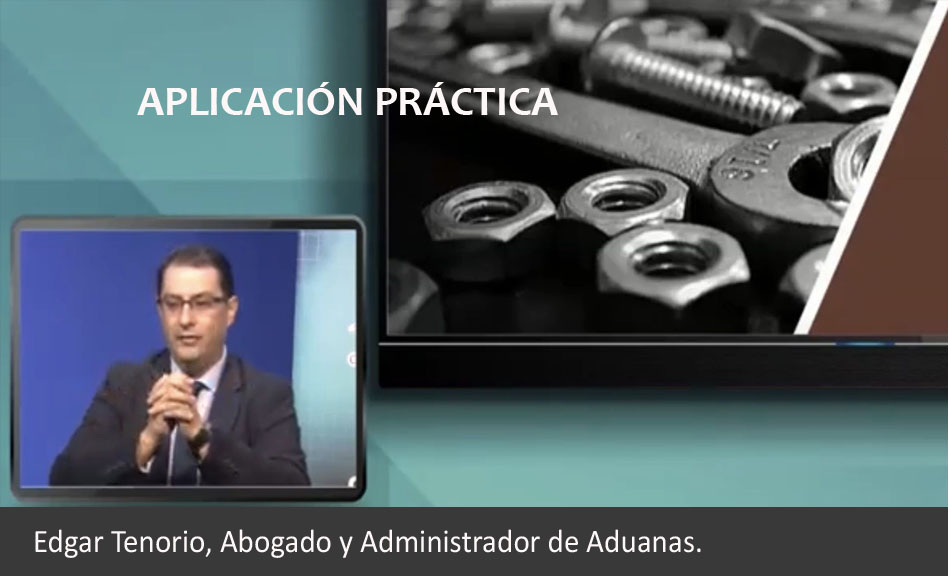 “Medidas no arancelarias: evolución e impacto” es una reflexión académica y especializada en una materia poco estudiada, pero de alta relevancia en el comercio internacional. El análisis del impacto de las barreras no arancelarias en el proceso de apertura comercial costarricense se concentró en el uso indebido de las medidas sanitarias y fitosanitarias y los obstáculos técnicos al comercio. Con el doble sombrero de especialista y estudiante de la UNED, Edgar Tenorio explicó los Acuerdos de la OMC bajo los cuales se presentan este tipo de medidas. Ponemos a disposición de nuestros lectores el Power Point utilizado por Edgar Tenorio. (Descargar presentación).
Esta disertación académica fue introducida por Velia Govaere de OCEX, quien en su intervención inicial destaca la transcendencia de esta materia, con las siguientes palabras:
“En casi 7 décadas, en el sistema multilateral de comercio, primero del GATT y luego de la OMC; se ha vivido, al mismo tiempo que la 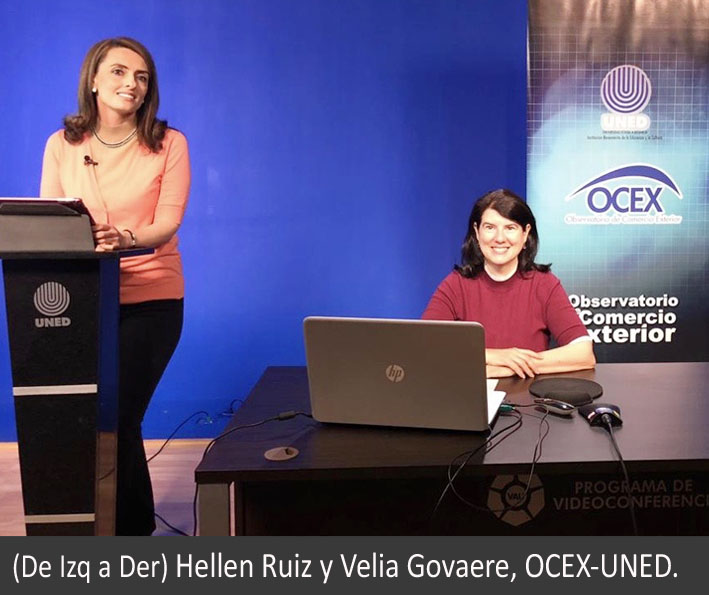 desgravación arancelaria, un crecimiento exponencial de barreras que NO SON ARANCELARIAS. Siempre que un país o una comunidad de países abre sus fronteras al comercio y elimina, total o parcialmente, los aranceles de ingreso de bienes o mercancías empiezan a propagarse otras formas, siempre variadas, y muchas veces ingeniosas, de proteccionismo.x
Si esto se ha venido observando a nivel mundial, a lo largo de los más de 70 años de creación de este sistema internacional de reglas de conducta, es altamente ilustrativo mostrar su prevalencia en casos de países de políticas reputadamente aperturistas, como lo es Costa Rica. Por eso cobra particular relevancia el análisis de las barreras no arancelarias en el proceso de apertura comercial de Costa Rica.”
En la videoconferencia, el especialista Edgar Tenorio, analiza entonces, bajo el espectro de la OMC, el Acuerdo de Obstáculos Técnicos al Comercio y el Acuerdo sobre Medidas Sanitarias y Fitosanitarias. Ponemos a disposición de nuestros usuarios la videoconferencia a la que podrán acceder en el siguiente link. (Descargar grabación).
From the Academy: UNED's response to Covid-19
MBA. Hellen Ruiz Hidalgo
Strategic Communicator, (OCEX-UNED)
"The public value of UNED is to serve all human beings" (Rodrigo Arias Camacho, UNED rector). That is why, in facing the emergency that the country is suffering, from the moment the Covid-19 began, UNED has made an extraordinary effort to offer assistance, through the academia, to the national struggle against the pandemic. The efforts and initiatives are numerous. There is institutional and human commitment to contribute significantly to the struggle of our people in this difficult ordeal.
OCEX dedicates this information capsule to divulge multiple initiatives of our Alma Mater, for its part or jointly with other actors of civil society, in the fight against the coronavirus. This compilation of initiatives is by no means exhaustive, as new actions are emerging every day and the focus has been on action rather than publicity. Even so, the added value that OCEX offers in this publication is to leave a historical record of this endeavor.
Distance learning initiatives
"I learn at home": UNED, MEP and SINART join forces to bring education to homes.
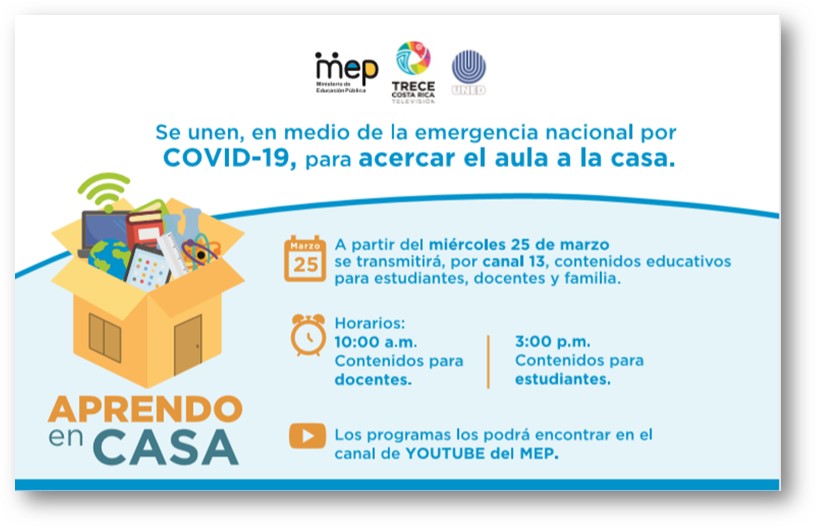
The Ministry of Public Education (MEP), the State Distance Learning University (UNED) and SINART Costa Rica Media will produce a television space, facilitate access to virtual tools, provide guides for autonomous work and educational resources aimed at teachers, the student population and their families. SINART, the television broadcast and the MEP offers among its vast content: The Mathematics Reform Program, Preparation for the FARO national tests, "Stay at home and read a book". Teachers have a link to more than 200 examples by level and subject on the mep.go.cr website, in the section called Coronavirus (Covid -19). From March 25, 2020, there is a broadcast of the program: "I learn at home", on channel 13.
Free virtual courses and webinars.

The UNED, in conjunction with the Uladislao Gámez Solano Institute for Professional Development, the Association of Friends for Learning (ADA), the Omar Dengo Foundation (FOD) and other open platforms. Teachers will have access to the online offer at: idp.mep.go.cr/
“Open U: Learning for Life."
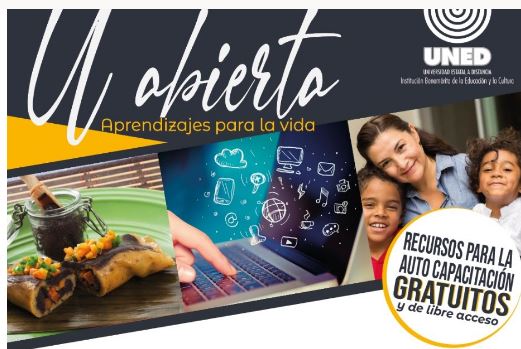
It is a new service of flexible education that the UNED offers to the national community through the department of University Extension, making available free resources for self-learning, with free access, without restriction of time, space or requirements.
CONED virtual platforms in educational support to students from educational centers closed by Covid-19.
The National College of Distance Education (CONED) of the UNED will make its Academic Platform available to the Ministry of Public Education (MEP) so that teachers and the student community in Secondary Education can make use of the academic resources available, while they remain closed in view of the risk of contagion from Covid-19. More information: https://coned.uned.ac.cr/
Some other initiatives
Didactic guide to complete the application for the Bono Proteger.
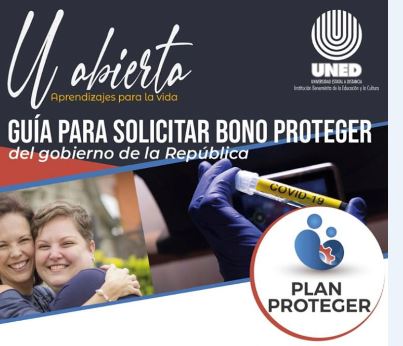
Didactic guide to complete the application for the Bono Proteger. The UNED prepared a didactic guide to complete, step by step, the application for the Bono Proteger, granted by the Government of the Republic. This is an initiative of the Directorate of Extension, in support of workers who have been affected by the Covid-19. The idea is to facilitate the filling out of the application to be a beneficiary of a temporary economic bonus. Guide available at:
http://contenidosvirtuales/GuiaBonoProteger
“FAB Face Shield”.
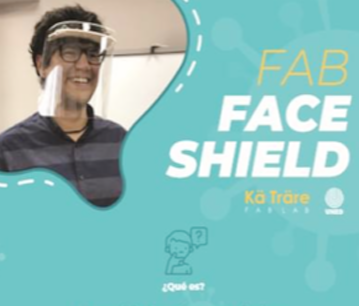
Face shield to protect against Covid-19 developed by UNED. It can be reproduced free of charge by the manufacturing laboratories. To ensure the safety of medical personnel, UNED released the drawings and technical data sheet of the model for use in public and private sectors. This is an initiative of UNED's Fab Lab Kä Träre, with the support of the University of Costa Rica (UCR) and the medical staff of the National Children's Hospital of Costa Rica. The model was shared with the Caja Costarricense del Seguro Social (CCSS), the Ministry of Health, the Colegio de Médicos y Cirujanos de Costa Rica and the Colabcr group. The protector's files are available at: https://ocw.uned.ac.cr/recursos/protector-facial/
Virtual hackathon against Covid-19.
 From March 23rd to April 2nd, 10 groups of professionals, university and high school students participated in "A Hackatón against Covid-19". This culminated in actual solutions to assist sectors impacted by the pandemic. The hackatón was organized by the UNED's Laboratorio de Investigación e Innovación Tecnológica (LIIT) and the citizen group Crisis Proactiva. They presented solutions in agriculture, trade, tourism, health, information and unemployment. Three initiatives were selected for the next phase of maturity and two of them will receive a total economic support of $20 thousand (dollars) from the United Nations Development Programme (UNDP) under the technical assistance of AUGE-UCR.
For information on the results: (Link 1) and in (Link 2).
Interactive cantonal map of case record of Covid-19.
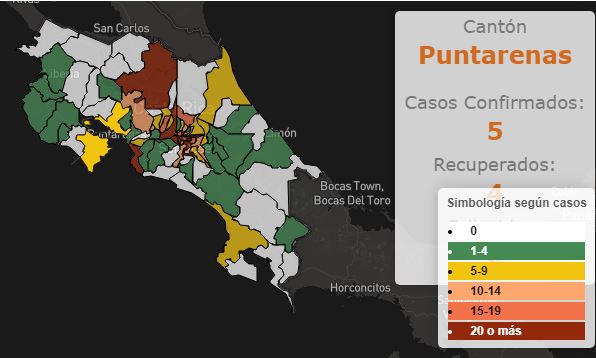
With the aim of facilitating the viewing of Covid-19 cases by canton in real time, the UNED's Laboratory for Research and Technological Innovation (LIIT) developed a map to interactively find cantonal information. This tool is used by the Ministry of Health to provide daily geographical statistics on Covid-19 cases.
Available at: http://geovision.uned.ac.cr/oges
UNED produces the first in the world mask that can be reused and is biodegradable.
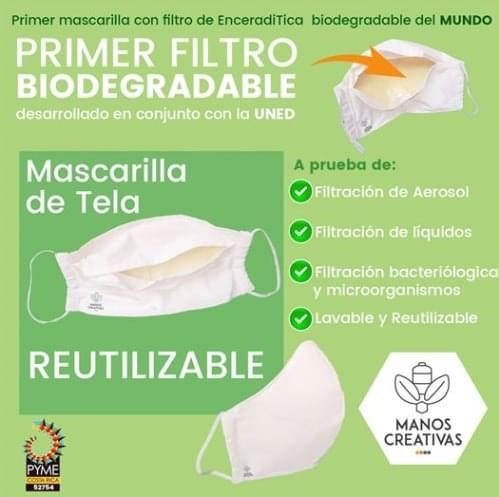
UNED produces the first in the world mask that can be reused and is biodegradable, with an "EnceradiTica" filter. This is a natural resin that waterproofs one of the three layers of cotton fabric of the mask. This initiative was developed by UNED's School of Exact Sciences in conjunction with some small companies, in order to offer a washable and reusable mask that is completely filter-proof against aerosols, liquids, bacteria and micro-organisms.
Advice on Teleworking.
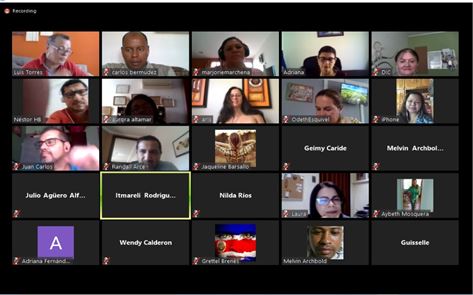
UNED provides this support on a virtual basis. Twenty-eight representatives of the universities affiliated with the System for the Internationalisation of Central American Higher Education (SIESCA) participated, under the coordination of the Telework Programme and the UNED's Directorate for Internationalisation and Cooperation (DIC).
Logistical assistance to the Costa Rican Social Security Fund (CCSS).
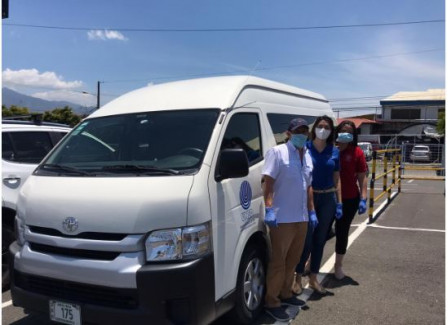
Assistance to the CCSS in transporting health technicians, delivering medicines and eyeglasses, giving priority to older people. Through the coordinated work of the medical service, occupational health, the transport unit and the UNED university centres, the university makes its vehicles and drivers available to the CCSS for the transportation of the health technicians, who are responsible for delivering the medicines, house by house.
Information actions concerning the Tax Relief Law, in response to Covid-19 crisis.
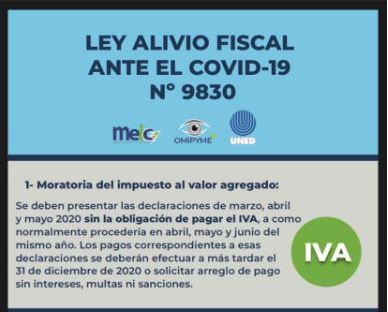
With the slogan "Do we continue, stop or reinvent ourselves? SMEs in the time of Covid-19." The Observatory on SMEs of the UNED, in cooperation with the Ministry of Economy, Industry and Commerce (MEIC), the Chamber of Industries of Costa Rica and the Council for Social Responsibility, informs on this issue to micro, small and medium-sized enterprises (MSMEs).
UNED.CR following COVID-19.
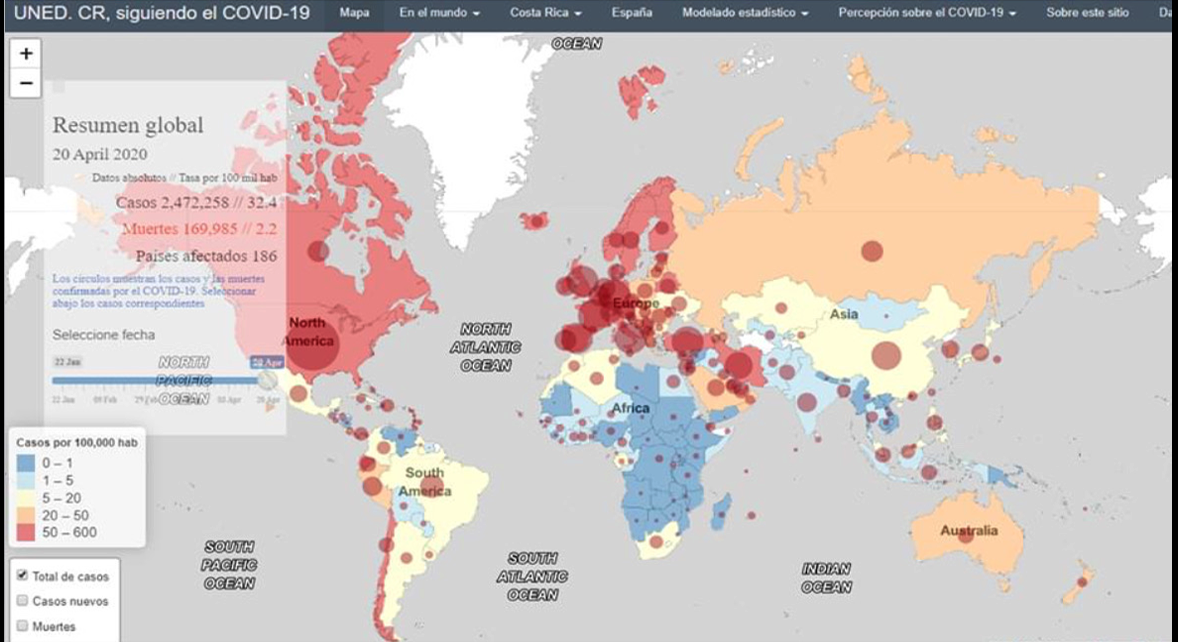
UNED.CR following COVID-19. Interactive website developed by Costa Rican and Spanish academics. With several statistical analyses and using primary sources it follows the evolution of the coronavirus at a national and international level. This site is available at:
https://uned.shinyapps.io/COVID_19/
Dissemination and information to national and international subscribers.
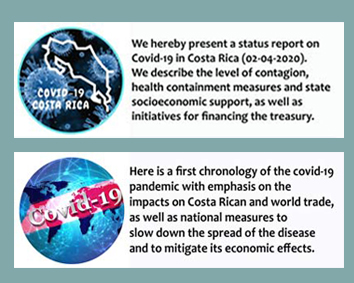
The Observatory of Foreign Trade (OCEX), of the UNED, by means of its capsules in English and Spanish, produces a state of affairs of the Covid-19 in Costa Rica (see link), impacts of the Covid-19 in the Costa Rican and world economy (see link). Additionally, it has contributed to the national debate by addressing the effects of Covid-19 in the national press (Hurricane after the storm) and analyzes the vulnerabilities of globalization that come to light with the Covid-19 virus
(A new vulnerability of globalization).
“Read a book a day."
This is part of the initiative: "Reading is fun". UNED through the Ebooks platform lends one book every day for free to be read at home. This initiative proposes to accompany, with pleasant, short and easy to read texts, the days at home in compliance with the preventive measures against Covid-19.
“Class Tool Kit”

This is the website available to UNED to answer the issue of how to create a safe environment for children and adolescents in virtual times. An initiative developed by the Laboratory for Research and Technological Innovation (LIIT). It compiles a list of tools for this purpose. Details of each can be found in the Parental Control section of the "Class Tool Kit" website:
https://investiga.uned.ac.cr/toolkit/
Open Educational Resources (REA for its name in Spanish).

UNED creates for the MEP a wide range of resources in different areas of knowledge. It incorporates more than 90 general tools and 130 open educational resources. It was created by an academic group from the State Distance Learning University (UNED) with the aim of providing students and teachers from all over the country with materials that complement their study processes by levels.
Emotional support for people with disabilities in the midst of this health crisis.
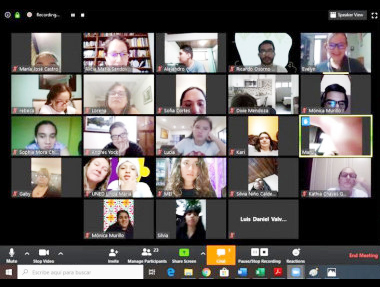
With weekly virtual sessions the UNED prioritizes a daily accompaniment through mobile devices. "The Puzzle Theater group", formed by people with disabilities, is active with the assistance of the UNED, this initiative allows the university to formulate a protocol of care for this population at a time when communication and interaction with their peers are key to addressing the crisis of Covid-19.
Study on the effect on the mental health of Costa Ricans as a result of Covid.
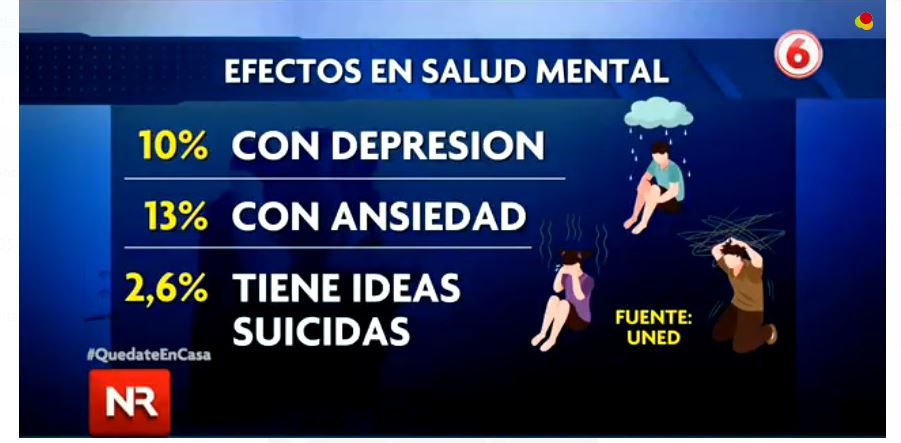
Study on the effect on the mental health of Costa Ricans as a result of Covid 19. The research is part of the work being carried out by Costa Rican and Spanish experts, including Dr. Greibin Villegas, a statistician, and Dr. Harold Arias Le Claire, a biologist, both academics from the UNED.
Parental accompaniment of children at home.
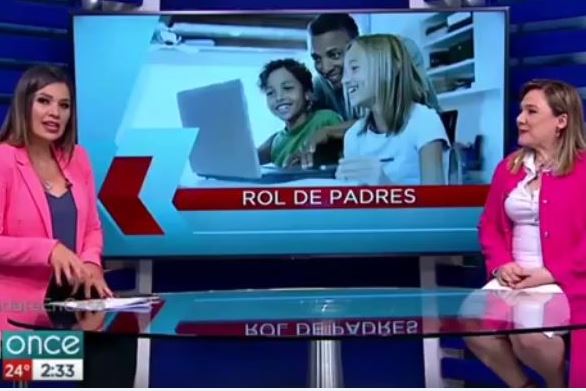
The director of the School of Sciences of the Education, of the UNED, Linda Madriz, participated in a program of NC Eleven, to share with parents advices and suggestions of parental follow-up in the middle of the emergency generated by the Covid-19.
Online celebration of the Day of the Book.

The UNED Publishing House, working in a coordinated relationship with the Ministry of Culture and Youth (MCJ), the National Printers, private initiatives such as the Book Club and Carretica Cuentera, joined forces to celebrate the Day of the Book online on April 23rd with a robust offering of books in electronic formats.
“Cherry Lime Juice”
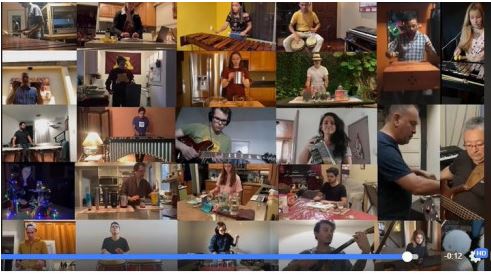
A musical work of national and international talents, it is part of the Virtual Percussion Extravaganza initiative, carried out by the Percussion Ensemble of the UNED's Direction of University Extension (DIREXTU), the Percussion Chair of the University of Costa Rica (UCR) and the School of Music of the University of Minnesota, USA. This effort produced a video to alleviate, through music, the social isolation caused by the Covid-19..
Packaging and distribution of food.

UNED, in coordination with the municipal emergency committees, the Joint Institute for Social Assistance (IMAS), the CCSS and the Ministry of Public Education (MEP), delivers food packages to the most vulnerable populations throughout the country.
Lecturas consultadas:
- Acontecer digital.13 marzo 2020. Plataformas virtuales del CONED apoyarán a estudiantes de centros educativos cerrados por Covid-19:https://www.uned.ac.cr/acontecer/a-diario/gestion-universitaria/3972-plataformas-virtuales
- Camtic.15 de abril 2020. Un hackatón contra el Covid-19 culminó con soluciones reales para apoyar a sectores afectados: https://www.camtic.org/actualidad-tic/una-hackaton-contra-el-covid-19-culmino-con-soluciones
- La Nación. 20 de marzo 2020. Una nueva vulnerabilidad de la globalización: https://www.nacion.com/opinion/columnistas/pagina-quince-una-nueva-vulnerabilidad
- Crhoy.com. 23 de marzo 2020. UNED invita a estudiantes a formar parte de la hackatón contra COVID-19: https://www.crhoy.com/nacionales/uned-invita-a-estudiantes-a-formar-parte-de-hackaton-contra-covid-19/
- Delfino.cr. 23 de marzo 2020. MEP lanza opciones para estudiar por internet y aprender mediante la televisión: https://delfino.cr/2020/03/mep-lanza-opciones-para-estudiar-por-internet-y-aprender-mediante-la-television
- Acontecer digital. 24 de marzo 2020. MEP, UNED y SINART unen esfuerzos para llevar educación a las casas: https://www.uned.ac.cr/acontecer/a-diario/gestion-universitaria Más información en https://www.puntarenasseoye.com/nacionales/mep-sinart-y-uned
- Cr.com. 24 de marzo 2020. Estas son las opciones virtuales del MEP para estudiar en casa: https://www.crhoy.com/nacionales/estas-son-las-opciones-virtuales-del-mep-para-estudiar-en-casa/
- Acontecer digital. 25 de marzo 2020. Las PYMES en tiempos del COVID-19: https://www.uned.ac.cr/acontecer/a-diario/gestion-universitaria/3987-las-pymes-en-tiempos-del-covid19
- Acontecer digital. 25 de marzo 2020. UNED crea mapa interactivo sobre el registro de casos del Covid-19 a nivel cantonal: https://www.uned.ac.cr/acontecer/a-diario/gestion-universitaria/3989-uned-crea-mapa-interactivo-sobre-el-registro-de-casos-del-covid-19-a-nivel-cantonal
- Cr.com. 25 de marzo 2020. Este mapa interactivo le muestra los casos de COVID-19 por cantón: https://www.crhoy.com/nacionales/este-mapa-interactivo-le-muestra-los-casos-de-covid-19-por-canton/
- Sitio web OCEX de la UNED. 26 de marzo 2020. Cápsula #3-2020 Impactos del covid-19 en la economía costarricense y mundial: https://www.uned.ac.cr/ocex/index.php/capsulas/558-capsula-3-2020-impactos-del-covid-19-en-la-economia-costarricense-y-mundial
- Acontecer digital. 28 de marzo 2020: Sistema para la Internacionalización de la Educación Superior Centroamericana (SIESCA) recibe asesoría de la UNED en materia de Teletrabajo:https://www.uned.ac.cr/acontecer/a-diario/gestion-universitaria/3992-uned-asesora-a-siesca-en-teletrabajo
- Acontecer digital. 30 de marzo 2020:Académicos desarrollan sitio interactivo “UNED.CR, siguiendo el COVID-19”: https://www.uned.ac.cr/acontecer/a-diario/gestion-universitaria/3994-uned-siguiendo-el-covid-19
- Acontecer digital. 31 de marzo 2020: CCSS validará prototipos de máscara de protección facial fabricada por la UNED para atención del COVID-19:https://www.uned.ac.cr/acontecer/a-diario/gestion-universitaria/3995-mascara
- Columbia.co.cr. 31 de marzo 2020: Médicos de la Caja prueban esta tarde prototipos de protectores faciales: https://www.columbia.co.cr/noticias/coronavirus-covid-19/15549-prototipos
- Acontecer digital. 03 de abril 2020. “Una Hackatón contra el Covid-19” culmina con soluciones reales para apoyar a sectores afectados por la pandemia: https://www.uned.ac.cr/acontecer/a-diario/gestion-universitaria/3999-cierra-hackaton-contra-covid-19
- Sitio web OCEX de la UNED. 4 de abril 2020. Estado de situación del Covid-19 en Costa Rica al 2 abril: https://www.uned.ac.cr/ocex/index.php/capsulas/562-capsula-4-2020-estado-de-situacion-del-covid-19-en-costa-rica-al-2-abril
- Acontecer digital. 5 de abril 2020. UNED lanza “U Abierta: Aprendizaje para la vida: https://www.uned.ac.cr/acontecer/a-diario/gestion-universitaria/4001-uned
- Cr.hoy.com. 11 de abril 2020. UNED impulsa lectura desde la casa con iniciativa gratuita: https://www.crhoy.com/nacionales/uned-impulsa-lectura-desde-la-casa-con-iniciativa-gratuita/
- Acontecer digital. 14 de abril 2020. La UNED prioriza acompañamiento emocional a personas en situación de discapacidad en medio de crisis sanitaria: https://www.uned.ac.cr/acontecer/a-diario/gestion-universitaria/4009-grupo-rompecabezas-adopta-la-virtualidad-para-continuar-sus-actividades
- Acontecer digital. 14 de abril 2020. UNED en medios nacionales: Velia Govaere, coordiandora del OCEX abordó el tema, "Una nueva vulnerabilidad de la globalización", en publicación de La Nación:
https://www.nacion.com/opinion/columnistas/pagina-quince-una-nueva-vulnerabilidad - La Nación. 16 de abril 2020. El huracán tras la tormenta: https://www.nacion.com/opinion/columnistas/pagina-quince-el-huracan-tras-la-tormenta/
- Acontecer digital. 16 de abril 2020. UNED apoya a la CCSS en el traslado de técnicos en salud, en la entrega de medicamentos y anteojos, priorizando adultos mayores: https://www.uned.ac.cr/acontecer/a-diario/gestion-universitaria/4012-vicerrectoria-ejecutiva-ccss-medicamentos
- Acontecer digital. 17 de abril 2020. MEP recibe colaboración de la UNED para crear compendio de Recursos Educativos Abiertos: https://www.uned.ac.cr/acontecer/a-diario/gestion-universitaria/4014-mep-recibe-colaboracion-uned-para-recursos-educativos-abiertos
- Repretel.com. 21 de abril 2020. Estudio del efecto en la Salud Mental de los costarricenses debido al COVID 19: https://www.repretel.com/programa/noticias-repretel-estelar
- Semanario Universidad. 22 de abril 2020. Instituciones públicas y privadas celebran en línea el Día del Libro: https://semanariouniversidad.com/cultura/instituciones-publicas-y-privadas-celebran-en-linea-el-dia-del-libro/
- Acontecer digital. 23 de abril 2020. UNED libera para laboratorios del mundo los planos de fabricación del protector facial contra el COVID-19:https://www.uned.ac.cr/acontecer/a-diario/gestion-universitaria/4024-uned-ibera-planos-de-fabricacion-de-protector-facial-contra-covid-19
- Acontecer digital. 23 de abril 2020. Virtual Percussion Extravaganza: el lenguaje de la música no tiene fronteras: https://www.uned.ac.cr/acontecer/a-diario/gestion-universitaria/4023-virtual-percussion-extravaganza-ensamble-de-percusion
Más artículos…
Página 54 de 131

