


Lecturers

Laurence Franklin Johnson
New Media Consortium
Dr. Larry Johnson serves as Chief Executive Officer of the New Media Consortium, an international not-for-profit consortium dedicated to the exploration and use of new media and new technologies. Its hundreds of member institutions constitute an elite list of the most highly regarded universities, museums, and research centers in the world. The NMC`s decade-long exploration of technology use in education, the Horizon Project, informs strategic technology planning for educational institutions in more than 100 countries. As the project`s founder, Johnson works with visionaries and thought leaders from across the globe to define new ways of thinking about technology, and explore emerging trends and issues.
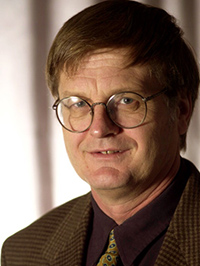
Terry Anderson
Athabasca University
Terry Anderson PhD is Professor and researcher in the Technology Enhanced Knowledge Research Centre at Athabasca University - Canada’s Open University. He has published widely in the area of distance education and educational technology and has co-authored or edited eight books and numerous papers. Terry is active in provincial, national, and international distance education associations and is a regular keynote presenter at professional and academic conferences. He teaches educational technology and research courses in Athabasca Universities’ Masters and Doctorate of Distance Education programs. His research interests focus on interaction and social media in educational contexts. Terry is the director of CIDER - the Canadian Institute for Distance Education Research (cider.athabascau.ca) and the editor of the International Review of Research on Distance and Open Learning (IRRODL www.irrodl.org). His homepage is at https://landing.athabascau.ca/pg/profile/terrya and his blog the “Virtual Canuck” is accessible at terrya.edublogs.org

María Elena Chan Núñez
Virtual University System of the University of Guadalajara
Maria Elena Chan works as a full time research professor at the University of Guadalajara and is member of the National System of Researchers. Currently, she serves as head of the Institute for Knowledge Management and Learning in Virtual Environments in the Virtual University System. Maria Elena researches and teaches on the educational communication in online learning and knowledge in virtual learning environments field. Since 2006, she coordinates the Seminar on Environment Scenarios and Objects of Virtual Educa, an international organization. It is part of the full-time faculty of the Ph.D. program in Systems and Educational Environments.
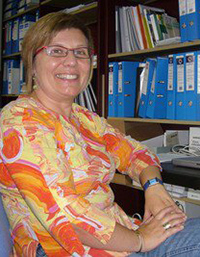
Mercè Gisbert Cervera
Universitat Rovira i Virgili
Mercè Gisbert Cervera is a professor of the Didactics Department and School Organization of the University Rovira i Virgili of Tarragona. Since 1995, she has been in charge of various management positions at the University Rovira i Virgili, from vice-dean of the Faculty of Education and Psychology (until 1997), director of the Institute of Educational Sciences (1998-2001), Director of Educational Resource Service (2001-2002) and from 2002 to May 2010, Vice-president for Educational Policy and Convergence of the EHEA. In the academic field, it is important to emphasize her coordination of the inter-university Doctorate at Educational Technology Distance Learning (UdL, UM, UIB, URV). She coordinates the research group of ARGET: Applied Research Group in Education and Technology, ref. 2009SGR596, their lines of work and research are part of the continuous faculty training, the distance learning and the new Information and Communication Technologies (ICT) for education. She has coordinated several research projects related to the ICT applied to the educational world such as GET and Pupitre (MCYT), DUCANET (MECD), SIMUL @: Evaluation of a Simulation for Learning Transversal Competences Technological Environment at the University. (National R + D + I 2008-2011 - MICINN) among others. It is important to mention her participation in the European Project Igualdader, of the Equal Community Initiative of the European Social Fund. Today, she is a member of the School Council and the Culture and Arts National Council in Cataluña.
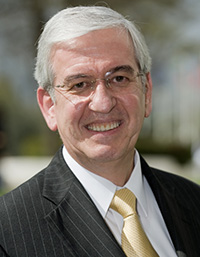
Patricio López del Puerto
Rector of the University TecVirtual
Patricio López works as a computer scientist is ITESM. He has an MBA from ITESM (Monterrery's Technological Institute) and a Master’s degree on Science with a major in Computer Science from Imperial College, London, England.
For more than 40 years, he has worked at Tecnológico de Monterrey System as Director of the Division of Sciences and Humanities (1985-1997). Besides that, he has been Vice-president of Information Technology (1997-2002) and since 2002, Rector of the University TecVirtual.
Among other activities, he has been responsible for the Satellite Interactive Education System (now University TecVirtual), representative of the Tecnológico de Monterrey in the "Trilateral Committee for Higher Education in North America" and Regional Vice-president of the National Association of Institutions with education in the area of Information Technology. He has been part of various professional associations such as Association for Computing Machinery, New York Academy of Science, Society for Applied Learning Technology, Asociación Mexicana de Profesionistas en Informática, Asociación Mexicana para el Comercio Electrónico and Sociedad Mexicana de Computadoras en la Educación (SOMECE) of which he was the Vice-president and National President.
Julio Cabero Almenara
University of Sevilla
Julio Cabero is professor of Didactics and School Organization of the University of Seville. He is director of the Audiovisual Resources and New Technologies Secretariat of the University of Sevilla. He is founding member of Edutec. He is director of Pixel-Bit, Journal of Media and Group Director of Didactic Research of the University of Sevilla. He has conducted several research projects in Educational Technology and Information Technology and Communication applied to education funded by the Ministry of Education of Spain and Andalucía. He has lectured at various Latin-American and Spanish universities. He is a member of the scientific board of different scientific journals. He is also member of the Board Director of the Ibero-American Educational Television Association. He was awarded with the Research Award of the best doctoral dissertation at the University of Sevilla, the 2009 University Research Award of Excellence at the Autonomous University of Tamaulipas (Mexico) and the Research Award Andres Bello (Venezuela). Moreover, he has received several other awards including one for Outstanding Undergraduate Dissertation, Real Maestranza de Caballería Award of Sevilla, and Social Research Award of the Diputación Provincial of Sevilla. He has also received the distinction of the Order of the Central University of Venezuela.
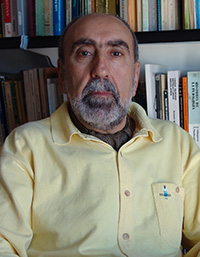
Francisco Martínez Sánchez
University of Murcia
Francisco Martínez holds a PhD in Teaching. He is a professor at the Universidad de Murcia. From its founding to 1992, he was Director of Audiovisual Resource Center (CRAV) of the University of Murcia. From 1992 to 1994, he was the vice-dean of the Faculty of Education at the University of Murcia. From 1997 to 2001 he was director of the Department of Didactics and School Organization of the University of Murcia. He is a member of the Order "Central University of Venezuela". He was Chairman of the Social Science Area Committee of the University of Murcia in 2006 and 2008. Since 2001, he has been the coordinator of the Doctoral Programs of the Department of Didactics and School Organization of the University of Murcia in Murcia, Dominican Republic, Argentina and Uruguay. Since 2009, h e has been a member of the External Evaluation Committee of SINAES-Costa Rica.
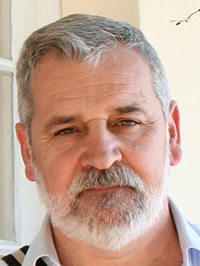
Jesús Salinas Ibañez
University of the Balearic Islands
Jesús Salinas holds a PhD in Philosophy and Education. He has a degree in Education and is a professor of EGB (General Basic Education). He is a professor of 'Educational Technology' at the University of the Balearic Islands. Also, he is the main researcher of the Educational Technology Group. Jesús is the director of the Inter-university Master and PhD’s degrees in Educational Technology: E-learning and Knowledge Management. He is director of the Master’s in Education in Virtual Environments of the Universidad Nacional de la Patagonia Austral (Argentina). He is the director of Edutec-e (Electronic Journal of Educational Technology).
In 2006, he was awarded with the Robert deKieffer International Fellowship Award from the Asociation for Educational Communication and Technology (ARCT).
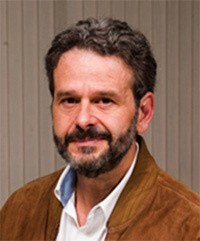
Roberto Sasso Rojas
President of the Technology Research Club
Roberto Sasso holds a Bachelor degree in Statistics from the Universidad de Costa Rica. He holds a Master’s degree in Computer Science from the University of Essex, England. He holds a PhD in Software Engineering from the University of Oxford. He has worked as a consultant in many Latin-American countries, Australia and England. These consultancies have focused mainly on strategic aspects of the technology application in business, with emphasis on new technologies implementation projects. In 1988, Roberto founded the Technology Research Club. He has chaired the jury of the National Award for Science and Technology. Between 2006 and 2008, he was the Vice-presidency in the development of the Digital Government. Between 2006 and 2007, he was the Vice-president on the Board of the Instituto Costarricense de Electricidad (ICE). Between 2004 and 2008, he was part of the Board of the Costa Rican Coalition for Development Initiatives (CINDE). Currently, he is the President of the Technology Research Club and Board member of Universidad Veritas. In 2008, as President of CIT, he promoted and published the Digital Strategy of Costa Rica and, in 2010, he coordinated TEDxPuraVida. He has published numerous articles in specialized and independent media worldwide. He has taught at the University of Costa Rica and INCAE. Since February 2008, he is an Associate Professor at Curtin University of Technology in Australia.
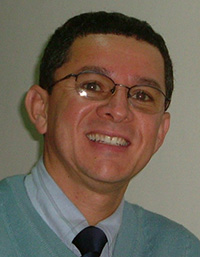
Johnny Valverde Chavarría
Universidad Estatal a Distancia
Sociologist, University outreach worker in agriculture and PhD. in Education. He has 31 years of work experience at Universidad Estatal a Distancia (UNED) in areas as diverse as the production of written material, university instruction, university outreach projects, educational research and student support services, among other areas. He has participated in research internships in Germany and in Mexico in the area of technology applied to education. He has also participated in conferences about this subject. His publications analyze the educational phenomenon with a critical approach, emphasizing issues related to the training of people in the distance education model using ICTs. He currently coordinates the OportUnidad project, sponsored by the European Commission as part of the ALFA III projects. He is also in charge of the Master’s program in Educational Technology at the UNED’s Postgraduate Program.

Alicia Avendaño Rivera
Director of the Technical Secretariat of the Digital Government
She has a Master’s degree in Administration of Information Technology from Universidad Nacional of Costa Rica. She also has a Master’s degree in International Finance; also graduated from the National University-FUNDEPOS. She has a degree in Business Administration with emphasis in accounting from Universidad de Costa Rica.
Mrs. Avendaño is currently the Director of the Technical Secretariat of the Digital Government, and has participated in the design and implementation of the Master Plan of the Digital Government of Costa Rica, the telecommuting project, the public-purchase online project through the system Mercado en Línea (Online Market) “Mer-Link,” and the definition of the Project Portfolio in the Action Plan of the Digital Government – from October 2006 to the present.
She has broad experience, in the public as well as in the private sector, in the development of technological projects and strategic monitoring of the progress towards the achievement of goals.
She has received the following awards: Best Government Employee, granted by the Camara de Exportadores (2000); Ancora Prize in Technology for the two year period 2005 and 2006, as a result of the development and implementation of the TICA system – Information Technology for the Customs Control. Award of Merit 2008, Honorary award given by the Colegio de Profesionales en Informática y Computación in Costa Rica; CIO award, most renowned award in 2008 in Central America and the Caribbean granted by the IT Now Central American magazine. Business person of the year 2010; Honorary award for public person of the year, given by El Financiero Journal. .Follow us